
Induction, Gas & Radiant
Dacor Cooktop Repair Tuned for Colorado Altitude
At roughly 5,920 feet, Highlands Ranch kitchens burn and cool a little differently than they would at sea level, and it shows up in how gas cooktops light and how sealed systems shed heat.
We factor that thin-air reality into every Dacor cooktop diagnosis, whether the fault is a dead induction zone, a clicking igniter, or a cracked glass surface.
Three cooktop technologies, three approaches
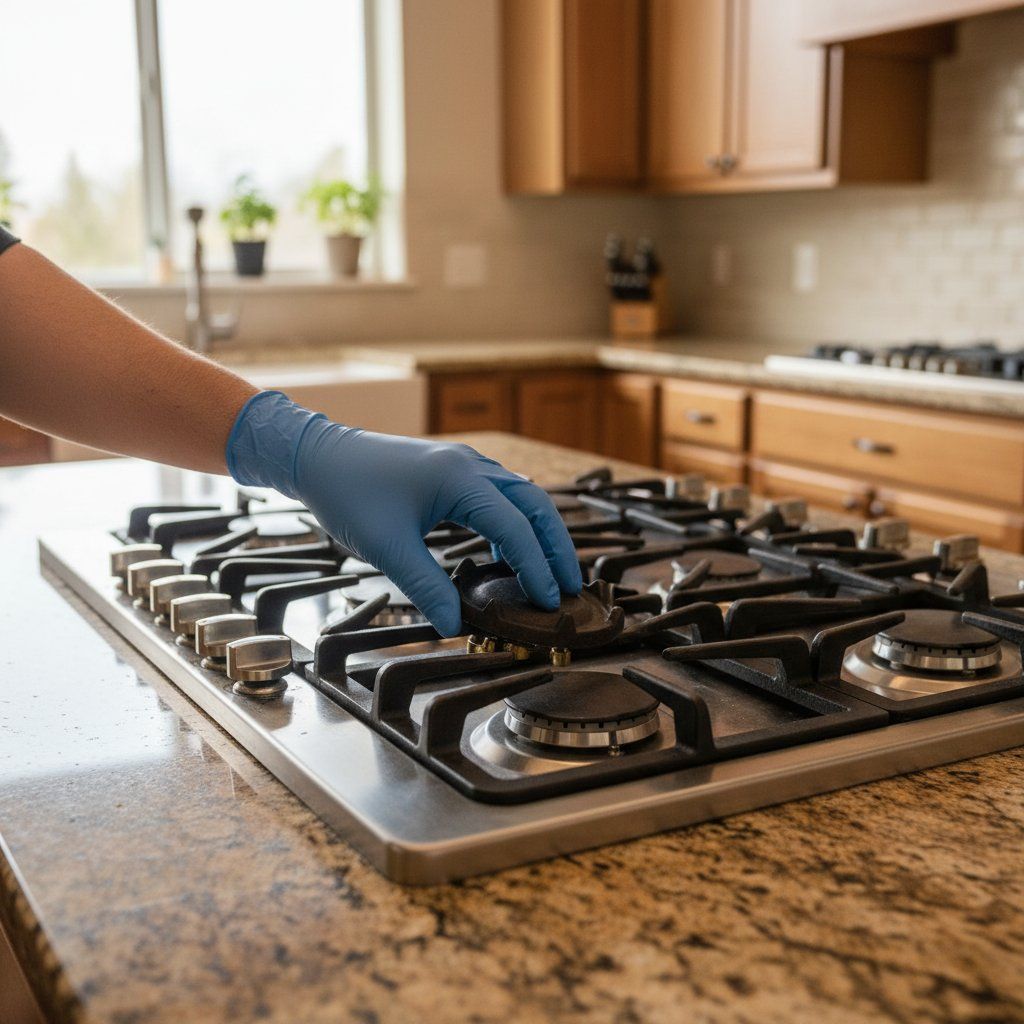
Dacor builds gas, induction and radiant cooktops, and each fails in its own way. Knowing the difference is half the repair.
Gas & combustion
Igniters, spark modules, burner heads and gas valves. At 5,920 feet, air-to-fuel behavior is worth a careful look when a flame runs weak or yellow.
Induction
Induction coils, pan-detection sensors and control boards. When a zone won't engage a magnetic pan, the fault is almost always electronic, not the glass.
Radiant electric
Surface elements, wiring and relays. A single dark zone typically traces to that element's circuit rather than the whole cooktop.
Glass surface
A cracked top is a replaceable part. We stop the unit from being used until the glass is swapped, so liquid never reaches the electronics.
What thin Colorado air actually changes
Highlands Ranch sits high enough that combustion has less oxygen to work with, so gas burners are more sensitive to the condition of their igniters, ports and air shutters. A burner that would shrug off a little grime near sea level can light slowly or burn yellow up here. That doesn't mean altitude broke your cooktop; it means altitude makes a genuine fault easier to spot, and we tune our checks accordingly.
Elevation matters for electronic systems too. Thinner air carries away heat less efficiently, so induction electronics and their cooling fans run a little harder. When we diagnose a Dacor cooktop here, we account for how the local environment stresses these components rather than assuming behavior from a sea-level manual.
Cooktop symptoms we diagnose
If your Dacor cooktop is doing any of the following, a focused diagnosis usually points straight to the part at fault.
Element or zone won't heat
A single dead zone almost always traces to that element or coil and its relay, not to the whole cooktop's power or board.
Induction won't detect pans
After confirming a magnet grips the pan base, a zone that still won't engage usually means a coil or pan-detection sensor issue.
Igniter keeps clicking
Continuous clicking after the flame catches points to a spark module or igniter switch, sometimes aggravated by moisture or debris.
Cracked glass surface
A crack is repairable by replacing the glass, but the cooktop should be taken out of service first to keep liquid away from the electronics.
Error codes on the display
Codes flag overheating sensors, element faults or communication errors. We verify the real condition behind each one before quoting.
Quick Answers
- Does high altitude affect how my Dacor gas cooktop burns?
- It does. At Highlands Ranch elevation there's less oxygen per cubic foot, so combustion is more sensitive to burner and air-shutter setup; a flame that's weak or yellow can be a genuine fault made more obvious by altitude. We check the igniter, burner ports and gas delivery with that thinner air in mind. Call (303) 729-0972 and we'll sort a lazy flame from a real problem.
- Why won't my Dacor induction cooktop detect my pans?
- Induction only heats magnetic cookware, so first confirm a magnet sticks firmly to the pan base. If it does and the zone still won't engage, the usual causes are a failing induction coil, a pan-detection sensor, or the touch-control board. A $89 diagnostic identifies which, and you can book it at https://nexfield.pro/crm/book?u=33.
- Is a cracked Dacor glass cooktop worth repairing?
- Often, yes. The glass surface is a replaceable part, and swapping it is usually far cheaper than a new built-in cooktop. Stop using a cracked induction or radiant top, since a crack can let liquid reach the electronics; we'll quote the exact glass replacement after inspecting the model on site.
Induction vs. gas: what fails and how we fix it
| Fault area | Induction cooktop | Gas cooktop |
|---|---|---|
| Won't heat | Coil or pan-detection sensor, or control board | Igniter, spark module, or gas valve |
| Altitude sensitivity | Cooling fans work harder in thinner air | Combustion more sensitive to burner and air-shutter setup |
| Surface damage | Cracked glass, replaced as a part | Clogged ports or damaged burner heads, cleaned or replaced |
| Control faults | Touch-control board or ribbon connection | Igniter switch or knob/control failure |
Frequently Asked Questions
One burner zone on my Dacor cooktop won't heat. Is the whole unit failing?
Rarely. A single dead zone is almost always local to that element or coil, its wiring, or the relay that controls it. The other zones working is actually a good sign that the board and power supply are healthy.
My gas igniter keeps clicking even after the burner lights. Why?
Persistent clicking usually means a spark module or igniter switch that isn't sensing the flame, or moisture and debris around the igniter. At altitude a slightly slow light-off can make it worse. We clean, test and replace the failing component as needed.
What do error codes on a Dacor cooktop indicate?
Codes typically flag an overheating sensor, a coil or element fault, or a control-communication problem. We read the code, verify the actual condition behind it, and repair the cause rather than simply clearing the display.
The touch controls on my Dacor cooktop are unresponsive. Can that be fixed?
Usually. Unresponsive touch controls point to the touch-control board, a ribbon connection, or trapped moisture under the glass. Many cases are repairable without replacing the entire cooktop.
Do you service gas, induction and radiant Dacor cooktops?
Yes, all three. We work on Dacor gas, induction and radiant electric cooktops across Highlands Ranch and the surrounding Douglas and Arapahoe County area.
What Highlands Ranch neighbors say
Called just before six in the morning fully expecting to leave a voicemail, and a real person picked up. Our garage freezer had quit overnight in the June heat with half a side of beef sitting in it — the condenser fan had seized solid, and he already had the replacement with him, so it was done in one visit. Not a thing thawed, and he was decent enough not to comment on the state of the garage.
I had already started pricing new dishwashers. Every glass was coming out of the Miele with a chalky grey film on it and nothing I ran through the machine made any difference. The real culprit was our hard Douglas County water: scale baked hard onto the heating element, and a spray-arm bearing worn enough to wobble. He descaled it, fitted the new bearing, and corrected a water softener setting that had apparently been wrong since the house was built — clear glassware again, for a small fraction of a replacement.
Sixty-two degrees is not where you want a cabinet of reds sitting, and by then the display had gone dark as well. A power blip earlier that month had cooked the control board; he confirmed that on the first visit, got the correct board, and fitted it a couple of days later. What I appreciated more was that he then set a target temperature our basement can genuinely hold — at 6,200 feet it swings far more than people expect — rather than leaving it on a number that would have the compressor fighting all year.
The griddle on our Wolf had gone from useful to useless, scorching eggs on one pass and barely setting them on the next. He put a meter on it, found the griddle plate thermostat reading well outside its range, and swapped it. Then he checked the oven calibration while he was in there without my asking, which up here matters more than most people realise. The invoice matched the number he gave me before he started, to the dollar.
Every couple of weeks we were chipping a sheet of ice off the freezer floor and mopping up after it. The drain-line heater had failed, so defrost water was refreezing before it ever reached the drain — a genuine part went in and the ice has not come back once since. He also pulled the grille and showed me how much dust a Westridge summer packs into the condenser, which I now vacuum on a schedule.
The humidity control in our undercounter wine drawer stopped regulating and the corks were starting to dry out. I have to be honest about the scheduling: we were given an arrival window twice and both times they turned up well outside it without a phone call, so an afternoon went to waste. The technician himself was excellent — he explained what the humidity module actually does, fitted the replacement, and it has held steady ever since. Good work, but the dispatching needs tightening up.
Ready to get your appliance fixed?
Call our 24/7 line or book online. We perform repairs daily 8 AM–6 PM across Highlands Ranch and nearby areas — with a flat $89 service call.
Calls answered 24/7 · No email or forms — just call or book online.